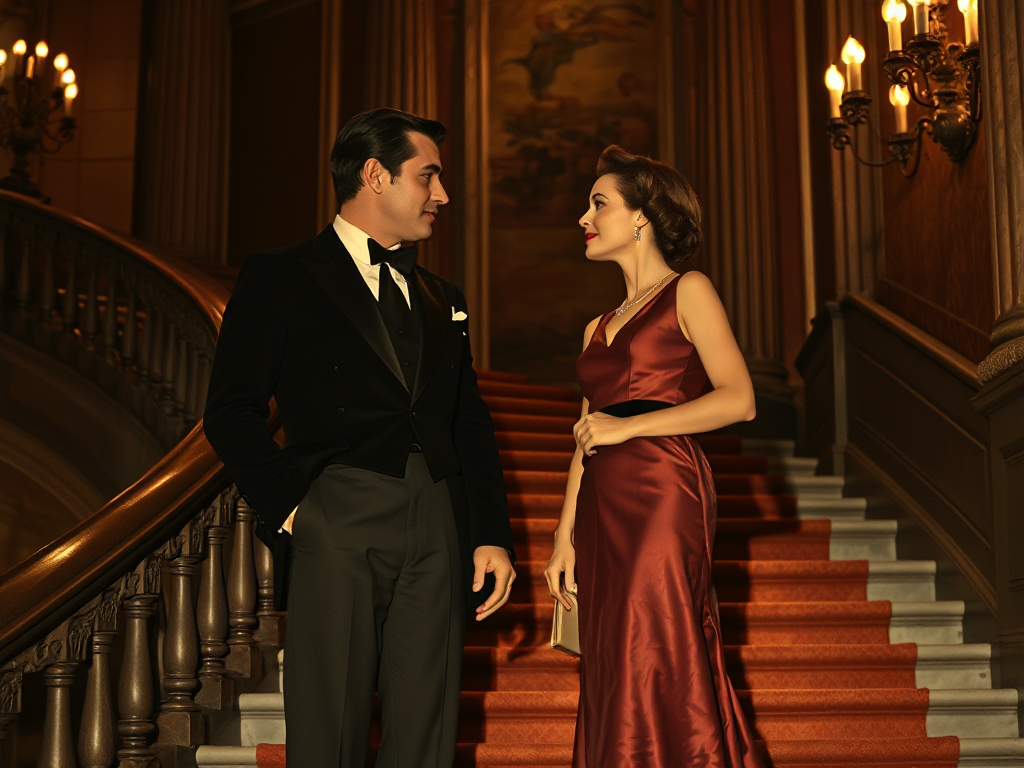
“A ring worn as camouflage, in a time when the truth could end a life or a career.”
Where the name comes from
Lavender has stood quietly for queerness since the 1920s, and the marriage that borrowed its colour did the same work the colour did — signalling something while shielding it. As Wikipedia defines it, a lavender marriage is a male–female, mixed-orientation marriage undertaken as a marriage of convenience to conceal the socially stigmatised sexual orientation of one or both partners. The term clings most closely to the public figures of the first half of the twentieth century — and above all to Hollywood, where it came into its own.
The studio years
In the 1920s the studios began writing morality clauses into actors’ contracts — a mechanism, first introduced by Universal, that let a company stop paying anyone who might “forfeit the respect of the public.” For a queer star, that respect was conditional on a secret, and a marriage was the most legible way to keep it. So agents and studios arranged unions whose real terms were unspoken: appear together, attend the premieres, keep up the picture. Many such contracts quietly granted each spouse a private life of their own.
Not everyone took the bargain. The actor William Haines was given an ultimatum by MGM in the mid-1930s — marry a woman or lose his contract — and chose his partner, Jimmie Shields, leaving the screen to build a celebrated interior-design firm with him instead. His refusal is the mirror image of the lavender marriage: the thing it cost to say no.
Haines and Shields stayed together from 1926 until Haines’s death in 1973 — a partnership Joan Crawford reportedly called “the happiest married couple in Hollywood,” and one no studio would let exist on a marriage licence.
What it protected
It is tempting to read these marriages only as deception, but they were first of all survival. In a century when a confirmed rumour could erase a livelihood, a friendship, a family, the lavender marriage bought breathing room — sometimes between two queer people who shielded each other, sometimes between a queer person and a knowing, willing spouse. It asked a real cost in loneliness and pretence. It also let people keep working, keep moving, and in some cases keep a quieter love alive in the margins the cover provided.
The slow thaw
The form faded as the danger did. After the 1969 Stonewall uprising and the gay-liberation movement that followed, fewer public figures needed a marriage to stand in for a closet, and by the end of the twentieth century the lavender marriage read mostly as history. The pressure that created it never fully vanished, though — in parts of the world where being openly queer remains perilous, marriages of convenience between gay men and lesbians still happen by mutual agreement; in China such an arrangement has its own word, xinghun, or nominal marriage.
The cost that didn’t fade
It would be comforting to file all of this under history, but the lavender marriage’s largest chapter may be the present one. In China, where being openly gay still carries heavy family and social penalty, the sexologist Zhang Beichuan estimates that roughly 80% of gay men marry women — leaving, by his count, somewhere between ten and sixteen million tongqi, the “wives of gay men.” The mutual, both-sides-knowing version the page named above as xinghun exists, but it is the smaller share. Far more common is the older arrangement exactly — cover, secrecy and all — with one wrenching difference from the studio marriages: the spouse providing the cover often never agreed to it, because she was never told.
That is the part the hopeful reading can miss. A lavender marriage is survival when two people choose it with open eyes; it becomes something else when the safety of one person is built on the deception of another. The tongqi carry the cost the closet still displaces onto whoever is nearest: by Zhang’s figures a large share contract a sexually transmitted infection — often how they learn the truth — and a sobering fraction are driven to despair. The form’s history is not only a story of clever survival under cruelty. It is also a reminder that concealment, when it cannot be honest, tends to find someone else to carry its weight.
The honest revival
The wider sense of the term — a marriage built for practical or social reasons rather than romance — has lately come back as something chosen out loud. Friends marry for companionship, for citizenship, for the legal scaffolding of next-of-kin and shared insurance, for the joint raising of a child. Platonic co-parenting has its own apps and growing membership; people pair up to build a household and a family without ever pretending the bond is romantic. What was once a necessary concealment becomes, in the open, simply one more way two people decide to be each other’s primary person.
How Partnersin.love holds it
This one lives in Orbit.
Orbit is for the partnership you negotiate on your own terms — where the agreement is named, the roles are chosen, and “married” can mean exactly what the two of you decide it means. Whether the union once hid a truth or now states one plainly, it is the deliberate design of a shared life.
Enter OrbitThreads to
The lavender marriage sits between concealment and intention, so it touches a whole cluster of forms. Its closest cousins are the Boston marriage, two women building a household with no man required, the companionate marriage joined for partnership over passion, and the queerplatonic bond that refuses the romance-or-friendship binary entirely. For the history it grew from, the Field Guide on queer love traces the long art of loving under surveillance, while amatonormativity names the social pressure that made a marriage feel mandatory in the first place. If you and a partner want to write down what your version actually promises, the Covenant is the tool for naming terms in your own words; the question-asker path is for anyone re-examining what marriage is even for. And the Lexicon keeps the vocabulary — lavender, mixed-orientation, nominal — close at hand.